



Care Guide
The dinnerware and home accessories from onomao are above all one thing: made for real life. They are meant to become daily companions and bring joy for a long time. The materials and design contribute to this, and a little care can help even more. Here's a small guide with tips to keep your favorite pieces in good condition for as long as possible.
Stoneware Dinnerware
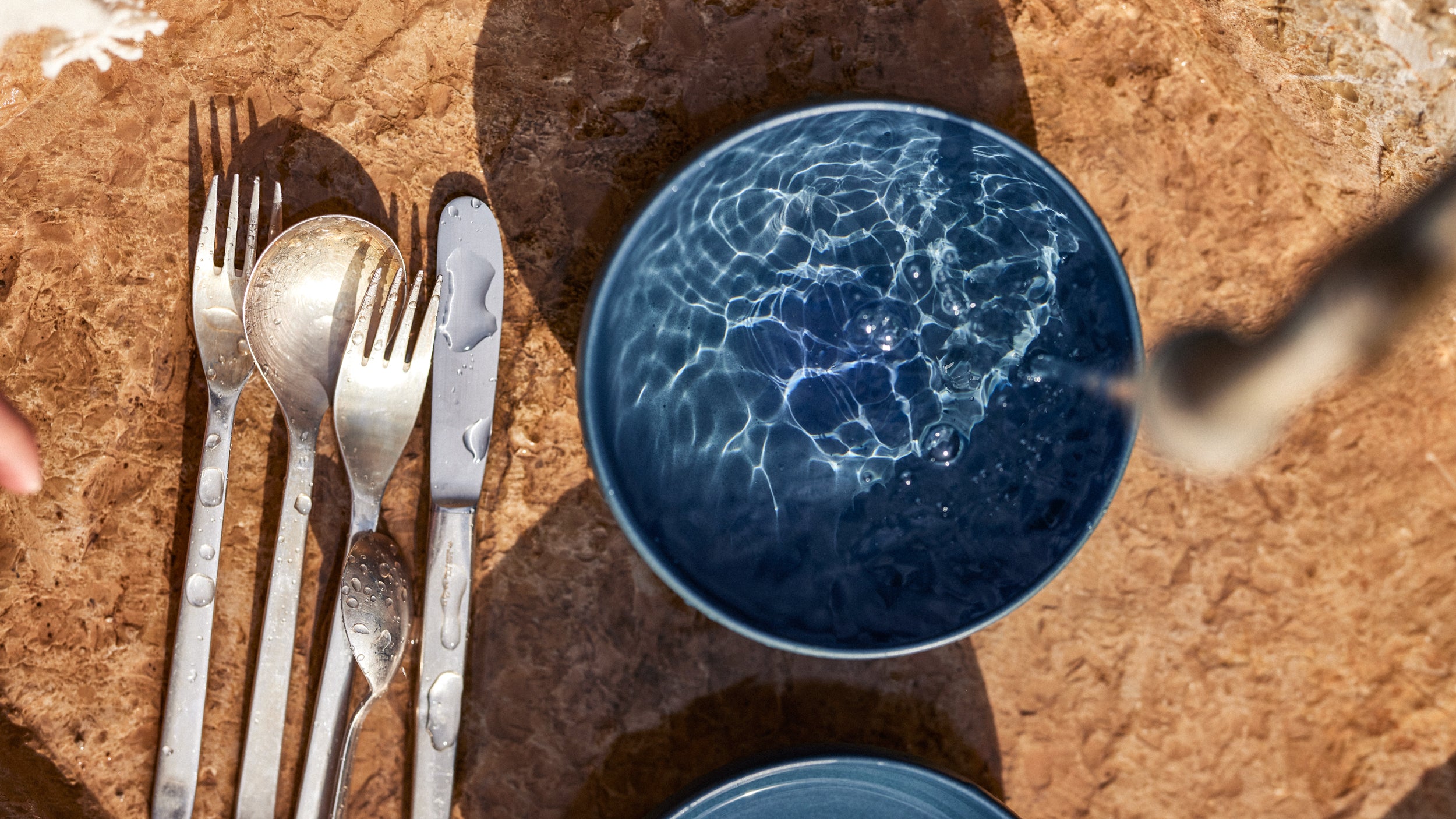
The ceramic tableware in our TRADITIONELL, KLASSIK, and ABERTA collections is made of stoneware. Unlike earthenware, it is fired at a very high temperature – around 1250 degrees Celsius – which makes it dense and durable, rather than remaining absorbent.
Firing is done in two stages. In the first firing, the clay loses its water and becomes solid, but remains absorbent – this is how it absorbs the glaze in the first place. In the second firing, at 1250 degrees, the body densifies, and the glaze melts into a smooth, glass-like layer that firmly bonds with the surface.
The result is a hard surface that does not absorb water and retains its color permanently.
Stoneware is dishwasher-safe – both glazed and unglazed, such as our "dipped" variations. Rinse aid prevents limescale stains.
The tableware is oven-safe up to 200 degrees Celsius and microwave-safe.
What ceramics do not like are sudden temperature changes – they can lead to cracks. Therefore, do not place a plate directly from the oven under cold water.
Porcelain tableware
Our "PURA" collection is made of porcelain. Porcelain is even harder and denser than stoneware, which makes it very robust and durable. It is also largely insensitive to temperature fluctuations.
Porcelain is dishwasher-safe and suitable for oven and microwave use.
Little helpers
Over time, traces of cutlery marks can become visible on matte ceramic glazes. To prevent this, it is recommended to use sharp knives. However, this cannot always be avoided even with the matte glazes of onomao ceramics (e.g., KLASSIK White, TRADITIONELL Natural White).
Fortunately, these marks are only superficial, and we have found a method that allows them to be easily removed. Simply mix baking soda powder with a little water to form a thick paste and apply it to the affected areas. Then work it in with a sponge and rinse with water.
We have also documented this in video form on Instagram: to the video
Another common problem with matte ceramics can be coffee and tea stains. Here too, baking soda helps as a tried and tested home remedy. This time, the discolored areas are first rubbed with lemon, and then baking soda is sprinkled over them. Let it soak in briefly, scrub with a sponge, and you're done.
We have also prepared a video for this: to the video
Vases
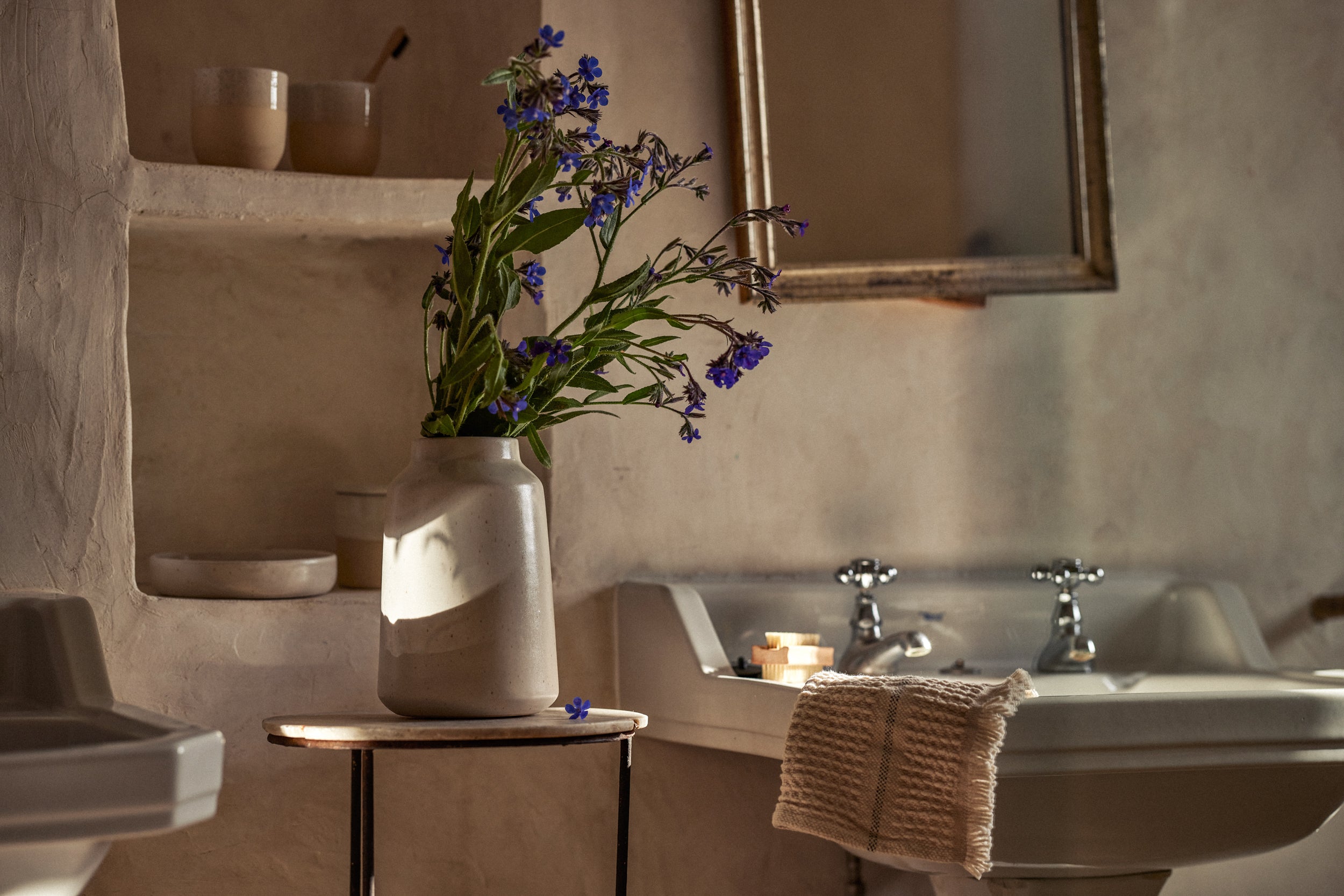
Our vases are also dishwasher-safe. If no dishwasher is available, treating them with vinegar or denture cleaning tablets will help against bacteria. Stubborn residues can be removed by hand with a dish brush.
As our vases are a natural product made of clay, in individual cases it may happen that they are not 100% watertight. Here, too, the rule applies: let them dry after cleaning.
Candlestick
The best way to remove wax residue from our candle holders is to pour boiling water over them and then wipe up the soft wax with a soft cloth.
Repair, don't replace
Despite careful handling, beloved ceramic pieces can sometimes break. In the spirit of sustainability, our motto is: repair or repurpose.
A loose cup handle or a broken piece of a fruit bowl can be re-glued with ceramic adhesive. Sharp-edged pieces can be smoothed with fine sandpaper. In Japan, broken ceramic pieces are even embellished with gold using the "Kintsugi" method, which is intended to highlight the beauty of imperfection.
Alternatively, the shards can also be used as drainage in flower pots.
Perhaps you can also find a completely new use for the pieces, e.g., as a flower pot or pen holder.